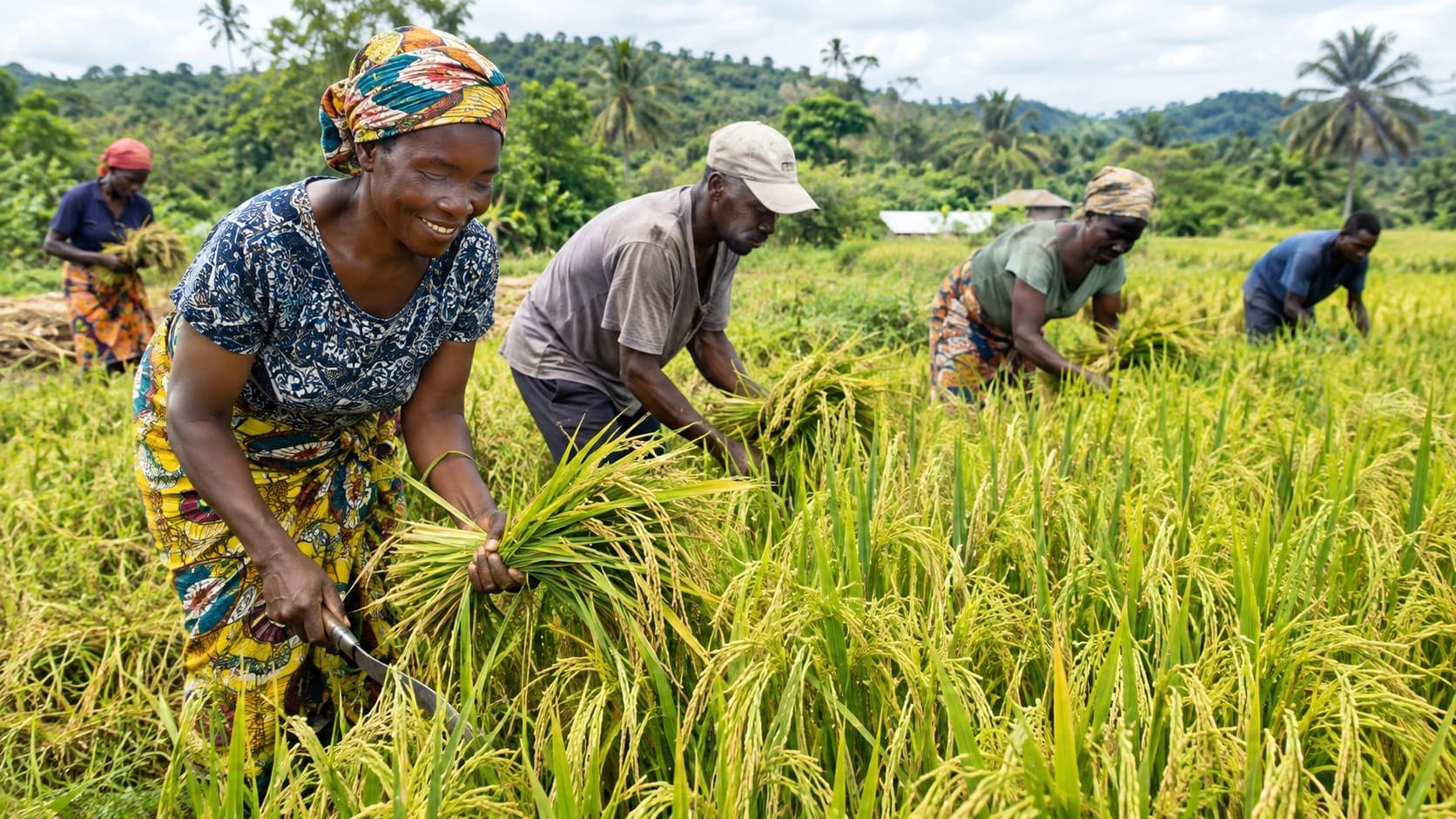
Growing Liberia's farms, one field at a time.
Livres Agriculture & Education Initiative partners with farmers, communities and the Ministry of Agriculture on seed cooperation, irrigation and inclusive rural livelihoods.
Local ownership first.
Scale only after evidence.
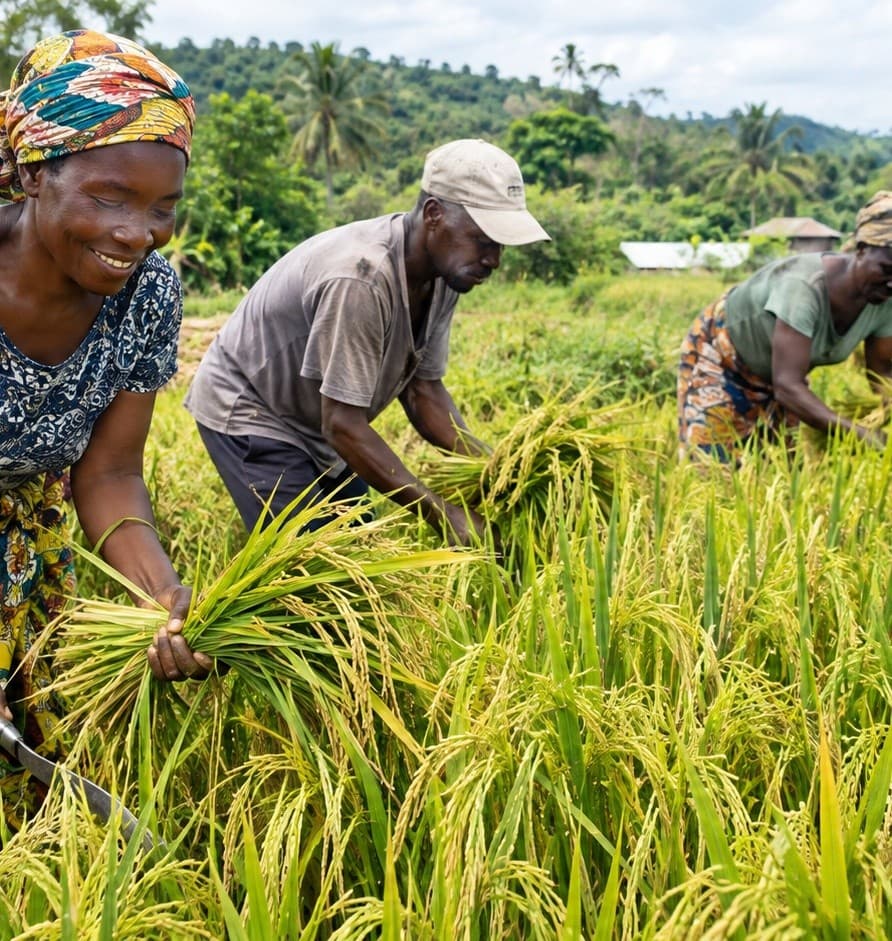
Our current work in Liberia is an agricultural survey and field assessment — listening to farmers, extension teams and local institutions, mapping practical constraints, and identifying suitable sites for a small, measurable pilot.
We align seed, water, soil and market actions with the priorities set out in the Ministry of Agriculture's Corporate Strategic Plan 2025–2030, so that what we build fits into Liberia's formal agricultural system — not around it.
- What works?
- Field assessment question 01
- What is missing?
- Field assessment question 02
- Who owns it?
- Field assessment question 03
- How to measure?
- Field assessment question 04
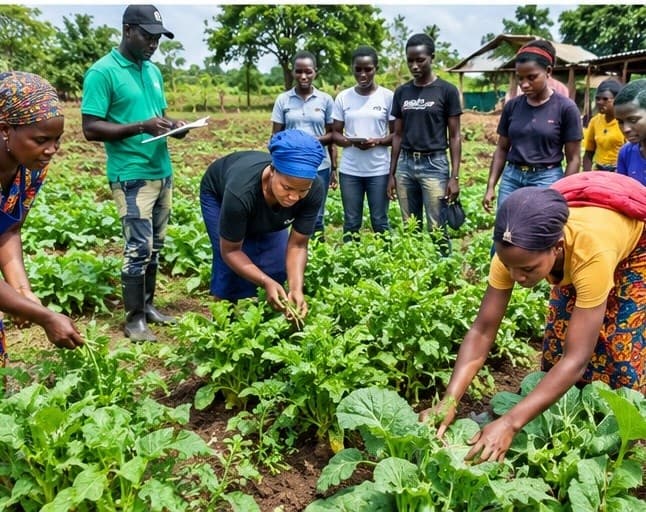
Six areas, one rural economy
Rice, cassava, vegetables, livestock and fish reinforce food security and household income. Diversification reduces dependence on one crop and creates multiple income pathways.
Seed Cooperation
A compliant pathway for variety identification, testing, multiplication and SDCA certification.
Water & Irrigation
Rainwater harvesting, farm ponds, drip lines and solar pumping to bridge rainy-season potential and year-round production.
Soil Health
Crop rotation, composting, mulching and integrated pest management to protect the production base.
Women & Youth Livelihoods
Training, inputs, finance, enterprise and leadership entry points so participation converts into income and ownership.
Post-Harvest & Markets
Processing, packaging and market linkages that move raw production toward quality, value addition and reliable buyers.
Livestock & Aquaculture
Milk, meat and manure alongside fingerlings and pond services — protein and income where local conditions support them.
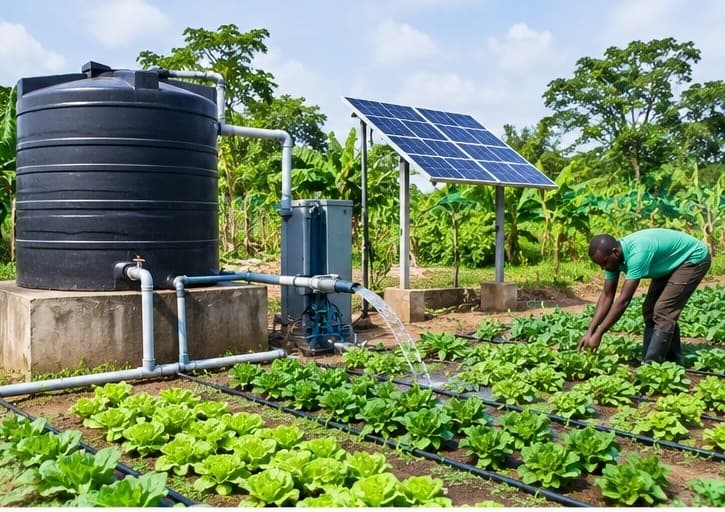
Rainwater harvesting & solar irrigation
Low-cost system options — roof and surface runoff collection, farm ponds and tanks, gravity-fed or low-pressure drip lines, and solar pumping for suitable sites — convert seasonal rainfall into reliable production without overbuilding infrastructure.
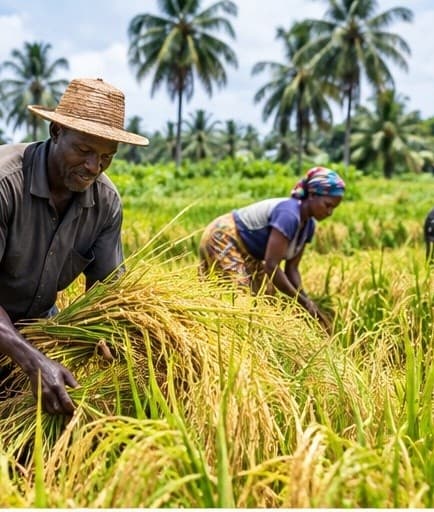
“Local ownership first; scale only after evidence.”
Digvijaysinh M. Gohil · Independent Agriculture Advisor & Seed Donor, India
One pilot. One results framework.
Government
Policy, coordination, approvals, extension and public systems.
Development Partners
Technical support, finance, capacity and learning.
Private Sector
Inputs, processing, logistics and buyers.
Communities
Land, labor, local knowledge and cooperative ownership.
A 12–24 month pilot roadmap
Partner with us on Liberia's agricultural future
We welcome coordination with Ministry departments, CARI and SDCA, development partners, the private sector, and communities on a joint, measurable pilot.